
The Reconstruction of Religious Thought in Islam
The Reconstruction of Religious Thought in Islam is Allama Iqbal’s major work of prose and the fullest statement of his philosophy. Where his poetry carries his ideas in image and feeling, this book sets them out in argument. It asks one large question: can the Islamic tradition be rethought for the modern age without losing its soul? Iqbal’s answer, worked out over seven lectures, is yes, and the book remains one of the most important works of modern Islamic thought.
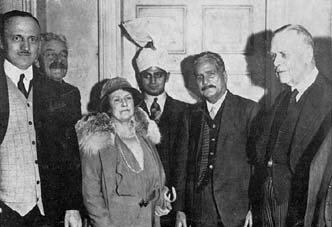
Background
The book grew out of a series of lectures Iqbal delivered in the late 1920s at Madras, Hyderabad and Aligarh. Six were first published together in Lahore in 1930, and a seventh was added when the Oxford University Press brought out an expanded edition in 1934. Iqbal wrote in English, and he was speaking to two audiences at once: Muslims who needed to see that their faith could meet the modern world, and Western readers who assumed it could not. Throughout, he draws on both the Quran and the Islamic philosophers on one side, and modern science and European philosophy, including Bergson, Whitehead and Einstein’s new physics, on the other.
The seven lectures
1. Knowledge and Religious Experience
Iqbal begins by asking how we know. He argues that reason and sense experience are not our only sources of knowledge, and that religious experience is a real and testable way of reaching truth. Far from rejecting science, he welcomes it, but he denies that it can be the whole story of what is real.
2. The Philosophical Test of the Revelations of Religious Experience
Here he puts religious experience to the test of philosophy. He examines the old proofs for the existence of God, finds the classical ones wanting, and reframes the question in terms of a living, creative reality rather than a static first cause.
3. The Conception of God and the Meaning of Prayer
Iqbal presents God as the Ultimate Ego, an infinite, living, creative self, not a distant abstraction. Prayer, in this view, is the human ego reaching out for a response from the heart of the universe, an act of discovery as much as of worship.
4. The Human Ego, His Freedom and Immortality
This lecture is the philosophical core of his idea of Khudi, the self. Iqbal argues that the human ego is real and free, and that immortality is not a gift handed out automatically but something a person must win by making the self strong and enduring.
5. The Spirit of Muslim Culture
Turning to history, Iqbal argues that the spirit of Muslim culture was concrete, empirical and forward-looking, and that it helped give birth to the inductive, experimental method that later powered modern science. He ties this to the idea of the finality of prophethood, which, he says, threw human beings back on their own reason and observation.
6. The Principle of Movement in the Structure of Islam
The most influential lecture. Iqbal argues that Islam contains a principle of movement, namely ijtihad, or independent reasoning, and that Muslims must use it to rethink their law for changed conditions. He discusses reform in the modern Muslim world and argues that the door of interpretation was never meant to be closed.
7. Is Religion Possible?
Added in 1934, the final lecture asks whether religion still has a place in a scientific age. Iqbal describes three stages of the religious life, faith, thought and discovery, and argues that at its highest religion is not mere belief but a direct, transforming experience of reality.
Where the lectures were given
The lectures that make up the book were not written for the page but delivered aloud, to live audiences, in the late 1920s. Iqbal gave the first of them in Madras, and others at Hyderabad and at the Muslim University of Aligarh, at the invitation of Muslim educational and literary bodies. Six lectures were published together in 1930, and the seventh, “Is Religion Possible?”, was added for the expanded Oxford University Press edition of 1934. Knowing that they began as spoken lectures helps explain their tone, which is at once scholarly and direct, the voice of a man arguing a case before listeners rather than footnoting a treatise.
The central ideas in more depth
A few ideas run through the whole book. The first is ijtihad, independent reasoning in matters of religious law, which Iqbal calls the principle of movement in Islam and which he wants Muslims to use boldly to meet the conditions of a new age. The second is the finality of prophethood, which he reads not as a closing of the door but as a coming of age: with no further prophet to lean on, human beings are thrown back on their own reason and observation, and this, he argues, is part of what gave Muslim culture its early scientific spirit. The third is his conception of God as the Ultimate Ego, a living, creative self rather than a distant abstraction, and his matching account of the human ego as free, real, and capable of winning immortality through effort. Together these ideas make the book a bridge between faith and the modern world.
Its influence and its critics
The Reconstruction is among the most discussed works of modern Islamic thought. Reformers have drawn on its call for ijtihad and its confidence that Islam can meet modern questions; scholars across the Muslim world still argue with it. It has also had critics. Some traditional scholars were uneasy with how freely Iqbal reinterpreted the tradition and how far he engaged Western philosophy, while some Western readers found his blending of science, mysticism and law hard to place. That the book still provokes such debate, nearly a century on, is a sign of how much life remains in it.
Read the full text
Iqbal died in 1938, so the original English text is in the public domain and free to read. The complete book is available from the following reliable sources:
- Iqbal Cyber Library (Iqbal Academy Pakistan, the official archive): the full English text as a free PDF.
- Internet Archive: several free editions, including the 1934 Oxford University Press text, in PDF and other formats.
An Urdu translation, Tashkeel-e-Jadeed Ilahiyaat-e-Islamiyah, was made by Syed Nazir Niazi and first published in 1958. That translation is still under copyright, so we link to it rather than reproduce it; a copy can be found through Rekhta and other Urdu digital libraries.
How he brought science and faith together
One of the boldest features of the Reconstruction is how freely Iqbal draws on modern science. He does not treat religion and science as enemies to be kept apart. Instead he reaches for the newest thought of his day, the philosophy of Bergson and Whitehead, and the revolution in physics brought by Einstein and the new picture of matter and time, and he uses it to argue his own case: that the universe is dynamic and unfinished, that time is real and creative, and that a living, creative God is more in keeping with modern knowledge than the static first cause of the old philosophy. Whether or not every scientific reference has aged well, the ambition is remarkable, and it is the reason the book felt so modern to its first readers.
Reading it today
The Reconstruction is a demanding book, written for readers ready to think hard, and it rewards patience. A newcomer may find it easiest to begin with the sixth lecture, on the principle of movement and ijtihad, which is the most direct and the most influential, and then to move outward to the more abstract lectures on knowledge, God and the self. It also helps to read it beside the poetry, for again and again an idea argued here in careful prose is one that Iqbal has already sung, so that the two halves of his work explain each other.
Why the book still matters
Nearly a century after it appeared, the Reconstruction remains one of the most discussed works of modern Islamic thought, and its central question has not gone away. Can a great religious tradition meet the modern world, take up its science and its freedoms, and still keep its soul? Iqbal’s answer, worked out with a rare command of both the tradition and modern philosophy, continues to be argued over by reformers and their critics alike. That the debate is still live is the surest sign that the book is not a relic but a living contribution.
Further reading
For an overview of Iqbal’s other works, see the wisdom of Allama Iqbal. For studies of his thought, see our page on books on Allama Iqbal, and for his life and ideas in brief, the main Allama Iqbal page.