
Books on Allama Iqbal
Few writers of the modern age have drawn as much scholarship as Allama Iqbal. Books, translations, dissertations and articles about his life and thought now run into the thousands, in Urdu, English, Persian, Arabic, German, Turkish and many other languages. This page is a guide to the most important studies, organised by theme, with a note on where the wider record is kept.
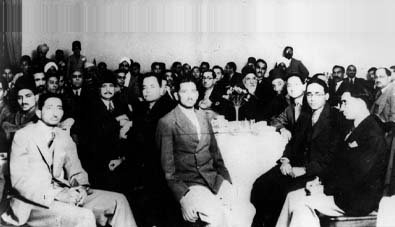
How much has been written on Iqbal?
The scale is remarkable. The most complete survey to date, Dr Rafiuddin Hashmi’s Kitabiyaat-e-Iqbal (2023), runs to more than 1,700 pages and lists around 6,000 items, that is, books, special magazine issues, translations, letters, commentaries and theses, produced on Iqbal in Urdu alone over the last 123 years. Alongside these there are several hundred book-length studies in English and other languages, and by one count more than 2,500 scholarly articles. What follows is a selection of the best known works, not a full list, which no single page could hold.
Biographies and memoirs
- Javid Iqbal, Zinda Rud. The major Urdu biography, written by Iqbal’s own son, drawing on family papers and personal knowledge.
- Abdul Majeed Salik, Zikr-e-Iqbal. An early and much-cited Urdu account by a contemporary who knew him.
- Atiya Begum, Iqbal. A short personal memoir by a friend from his European years.
Studies of his philosophy and religious thought
- Annemarie Schimmel, Gabriel’s Wing: A Study into the Religious Ideas of Sir Muhammad Iqbal. The classic Western study of Iqbal’s thought, by one of the great scholars of Islamic literature.
- Sheila McDonough, The Flame of Sinai. A careful account of Iqbal’s religious and ethical ideas.
- Mustansir Mir, Iqbal. A clear, compact introduction to the poet and thinker for the general reader.
- Hafeez Malik (ed.), Iqbal: Poet-Philosopher of Pakistan. A wide-ranging collection of essays by leading scholars.
Comparative studies
- Nazir Qaiser, Iqbal and the Western Philosophers. Sets Iqbal beside Nietzsche, Bergson and others.
- Ghulam Sabir, Kierkegaard and Iqbal. A study of two thinkers of faith and the self.
- M. A. Chughtai, Iqbal and Goethe. On Iqbal’s long dialogue with the German poet, seen most clearly in Payam-e-Mashriq.
On his politics and role in Pakistan
- Rashida Malik, Iqbal: The Spiritual Father of Pakistan. On Iqbal’s political vision and its part in the making of Pakistan.
- C. M. Naim (ed.), Iqbal, Jinnah and Pakistan. Essays on Iqbal, Jinnah and the movement they shaped.
Reference works and bibliographies
- Rafiuddin Hashmi, Kitabiyaat-e-Iqbal (2023). The most comprehensive bibliography of writing on Iqbal, with some 6,000 entries.
- The publications of Iqbal Academy Pakistan, the official body devoted to research on Iqbal, including the long-running journal Iqbal Review.
- Muhammad Iqbal bibliography (Wikipedia). A useful working list of major works by and about Iqbal, with onward links.
The translators who carried Iqbal into English
Much of Iqbal’s fame in the West rests on a handful of gifted translators. Reynold A. Nicholson, the great Cambridge scholar of Persian, translated Asrar-e-Khudi as The Secrets of the Self in 1920, the book that first introduced Iqbal’s philosophy to English readers. A. J. Arberry, another Cambridge Orientalist, went on to render several of the Persian works, including Rumuz-e-Bekhudi as The Mysteries of Selflessness, the Javid Nama, the Persian Psalms and the Complaint and Answer. Later, V. G. Kiernan produced widely read English versions of Iqbal’s shorter poems. These translations are themselves part of the scholarship, since each translator had to wrestle with the difficulty of carrying a thought so bound up in its own language into another.
Iqbal in other languages
Iqbal’s reach owes a great deal to translation. His Persian works were read directly in Iran, but his Urdu poetry and his prose have been carried into Arabic, most notably by the Egyptian scholar Abdul Wahhab Azzam, as well as into German, Turkish, French and many other tongues. Because he himself wrote across Urdu, Persian and English, and drew on Arabic, he is one of the few modern poets who belongs at once to several literary traditions, and the study of him has grown up in all of them.
Journals and centres of study
Serious study of Iqbal has its own institutions. The chief of these is Iqbal Academy Pakistan, founded in the 1950s, which publishes books, holds conferences, and brings out the long-running journal Iqbal Review, a home for scholarship on his life and thought. Universities in Pakistan and abroad have devoted chairs, departments and dissertations to him, and his work is a fixed part of the syllabus in Islamic studies, Urdu and Persian literature, and modern intellectual history.
How to begin
For a reader new to Iqbal, the best path is often to start with a short, clear introduction such as Mustansir Mir’s Iqbal or Annemarie Schimmel’s study, and then turn to Iqbal’s own words, above all The Reconstruction of Religious Thought in Islam for his prose and Bal-e-Jibril for his Urdu verse. From there the wider scholarship, the comparative studies and the biographies, opens naturally, and the bibliographies listed below point the way to as much or as little as a reader wants.
What scholars argue about
The writing on Iqbal is not just praise; it is a long argument. Scholars still debate how far his idea of khudi owes to Nietzsche and how far it is his own reading of the Quran, whether his political thought points straight to the state of Pakistan or to something broader, and how to hold together the poet, the philosopher and the lawyer in one account of the man. His attitude to Sufism, which he both drew on and criticised, is another live question, as is the relation between his Persian and his Urdu work. A reader who follows these debates soon sees that there is no single agreed Iqbal, which is part of why the scholarship keeps growing.
Start with his own words
For all the value of the studies listed here, the best guide to Iqbal remains Iqbal. The books written about him are most useful once a reader has met the poetry and the prose directly, so that the scholarship explains something already felt rather than standing in for it. A good order is to read a few of the poems, then The Reconstruction for the thought behind them, and only then turn to the biographies and studies to fill in the life and the context.
Scholars to know
A few names recur so often in the study of Iqbal that they are worth knowing at the outset. R. A. Nicholson and A. J. Arberry, both of Cambridge, were the great early translators who carried his Persian work into English. Annemarie Schimmel, the German scholar of Islamic literature, wrote the classic Western study of his religious thought, Gabriel’s Wing. Javid Iqbal, the poet’s own son and a distinguished jurist, wrote the major biography Zinda Rud. And Abdul Wahhab Azzam of Egypt did much to make Iqbal known in the Arab world. To follow these figures is to have a thread through the vast literature.
Studying Iqbal today
For anyone who wishes to go further, the path is well marked. Iqbal is a set subject in Islamic studies, Urdu and Persian literature, and modern intellectual history at universities across Pakistan and beyond, and Iqbal Academy Pakistan exists precisely to support such study, publishing new research each year and keeping the journal Iqbal Review. A reader can begin with a short introduction, move to Iqbal’s own Reconstruction and his poetry, and then follow the bibliographies into as much of the scholarship as they wish. The sheer scale of what has been written can be daunting, but the starting points are simple and clear.
Where to find these works
Several trusted collections hold books by and about Iqbal, many of them free to read:
- Iqbal Cyber Library, run by Iqbal Academy Pakistan, the single richest online collection of works by and about Iqbal in several languages.
- Internet Archive, which holds many out-of-copyright editions that can be read or downloaded for free.
- Iqbal Academy Pakistan, which continues to publish new research each year.
- Rekhta, for reading Iqbal’s own Urdu poetry with text, transliteration and translation.
- Encyclopaedia Britannica, for a reliable overview of his life and works.
To read Iqbal himself, see our guide to the wisdom of Allama Iqbal, the page on The Reconstruction of Religious Thought in Islam, and the overview on the Allama Iqbal page.