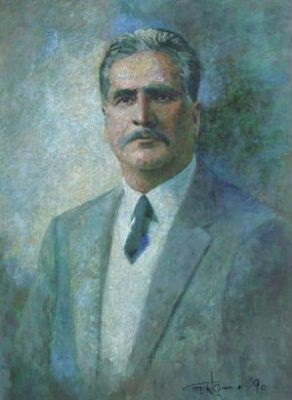
Sir Muhammad Iqbal (1877 to 1938) was a poet, philosopher and political thinker, and one of the most important figures the subcontinent has produced. He wrote in Urdu and Persian, argued with Western philosophy on its own ground, and gave the Muslims of India a language of self-belief that still carries weight today. Pakistan honours him as its national poet and as the thinker who first framed the idea of a separate Muslim homeland. This page is a full overview of his life, work and ideas, and each part links to a dedicated page where you can read more.
What makes Iqbal remarkable is that he was great in more than one field at once. He was a poet of the first rank in two languages, a trained philosopher who had studied in England and Germany, and a political thinker whose ideas helped bring a nation into being. Most people are lucky to leave a mark in one of these; Iqbal left a lasting mark in all three, and joined them into a single vision. This page gathers the whole of that achievement, his life, his books, his ideas, his politics and his afterlife, and links each part to a fuller page of its own, so that a reader can move from a quick overview to as much depth as they wish.
His titles
Iqbal is known by several honorific titles, each pointing to a different side of his work:
- Shair-e-Mashriq (Poet of the East). A voice for the East, setting its spiritual heritage against the materialism he saw in the West, and celebrating its capacity for renewal.
- Hakeem-ul-Ummat (Sage of the Community). His poetry and prose read the condition of the Muslim community, named its ailments, and offered a way forward through self-realisation and collective effort.
- Mufakkir-e-Pakistan (Thinker of Pakistan). He is recognised as the intellectual founder of Pakistan, the man who gave the demand for a Muslim homeland its shape.
His life at a glance
Iqbal was born in Sialkot on 9 November 1877, a date now marked in Pakistan as Iqbal Day. He studied in Sialkot and Lahore, then at Trinity College, Cambridge, qualified as a barrister at Lincoln’s Inn, and took a doctorate from the University of Munich in 1908. He returned to Lahore that year and spent the rest of his life there as a teacher, lawyer, poet and, in time, a political leader. He died on 21 April 1938 and is buried beside the Badshahi Mosque in Lahore. You can read the full account on the pages for his early academic life, his career, and his family and personal life.
Family, lineage and birth
Iqbal was born on 9 November 1877 in Sialkot, a town in the Punjab, into a family of modest means and deep faith. The family traced its roots to Kashmir. Its ancestors had been Kashmiri Brahmins, of the Sapru line, who embraced Islam some generations before Iqbal’s birth and later settled in Sialkot. Iqbal was proud of this descent and referred to it more than once in his verse, seeing in it a meeting of two great streams, the intellectual inheritance of Kashmir and the faith he was born into.
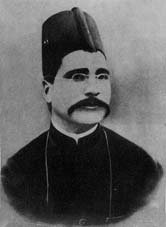
His father, Sheikh Noor Muhammad, made his living as a tailor and cap-maker, but he was known less for his trade than for his piety. Those who met him called him an untutored philosopher, a man with little formal schooling yet a rare depth of spiritual insight, at home among the mystics and given to long hours of prayer and reflection. It was in his father’s house, and from his father’s example, that Iqbal first breathed the air of Islamic devotion that would later fill his poetry. Tradition holds that Noor Muhammad sensed something unusual in the boy from the first and set his heart on giving him the best learning he could reach.
His mother, Imam Bibi, was an unlettered but wise and generous woman, remembered in the family for her kindness to the poor and her quiet strength. Iqbal was very close to her, and when she died in 1914 he wrote one of his most moving Urdu poems in her memory, Walida Marhuma Ki Yaad Mein, an elegy that lets us see, behind the public sage, a grieving son. Between these two parents, the devout father and the tender mother, the shape of Iqbal’s inner life was set long before he ever opened a book of philosophy. His family and personal life are covered in full on the page for his family and personal life.
Early education and Sayyid Mir Hassan
Iqbal’s schooling began in the traditional way, with the Quran and the basics of Arabic and Persian, but his real formation came from one teacher above all others: Sayyid Mir Hassan, a scholar of Arabic and Persian in Sialkot. It was Mir Hassan who saw the boy’s gift early and, rather than push him only toward examinations, grounded him in the whole classical inheritance, its poetry, its learning and its manner of thought. Under him Iqbal read the Persian masters and gained the command of the language that would one day let him write Persian verse admired in Iran itself.
This was not the narrow schooling the colonial system offered, built to turn out clerks. It was an education in a living tradition, and Iqbal never forgot the debt. Years later, when the British offered him a knighthood, he is said to have asked that his old teacher be honoured too, so that the pupil’s fame might reflect back on the man who had made him. Iqbal attended the Scotch Mission School in Sialkot, where Mir Hassan taught, before moving on to higher study in Lahore. His years of formal study are set out on the page for his early academic life.
Government College, Lahore, and Thomas Arnold
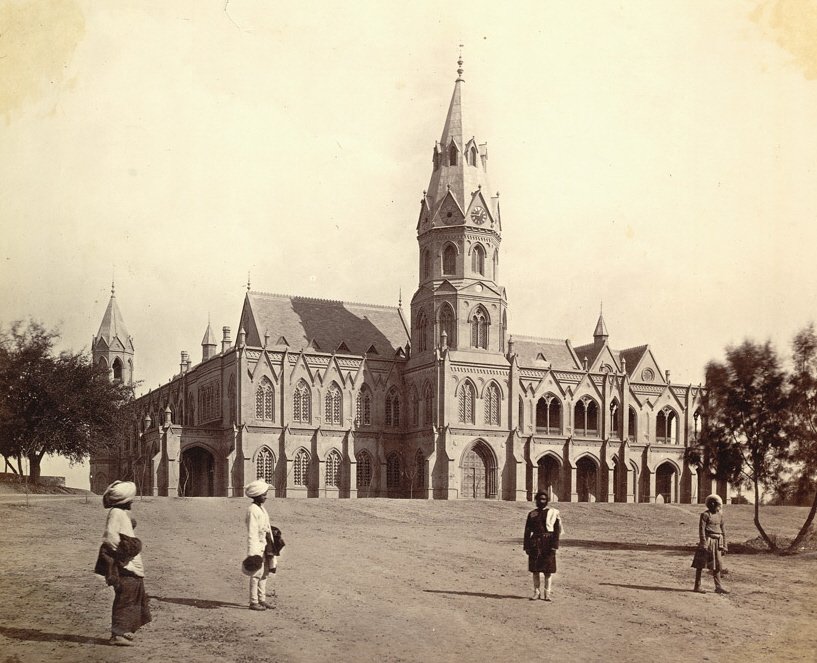
In the 1890s Iqbal moved to Lahore, then the intellectual heart of the Punjab, and entered Government College. He took his Bachelor of Arts in 1897 and his Master of Arts in Philosophy in 1899. It was here that he met the second great teacher of his life, Sir Thomas Walker Arnold, an English orientalist who taught philosophy at the college. Arnold combined a deep knowledge of Islamic thought with a full command of modern European philosophy, and in him Iqbal found a mind that could move between the two worlds he himself would later join.
Arnold recognised the young man’s promise and encouraged him to continue his studies in Europe. The bond between them was warm, and when Arnold left India, Iqbal wrote a poem of farewell. It was partly to follow his teacher, and partly to test his own ideas against the source, that Iqbal set sail for England in 1905. Already, before he left, he was known in Lahore as a poet, reciting his early Urdu verse at the gatherings of the Anjuman-e-Himayat-e-Islam and at the city’s mushairas, where his patriotic and tender poems won him a wide following.
The journey to Europe
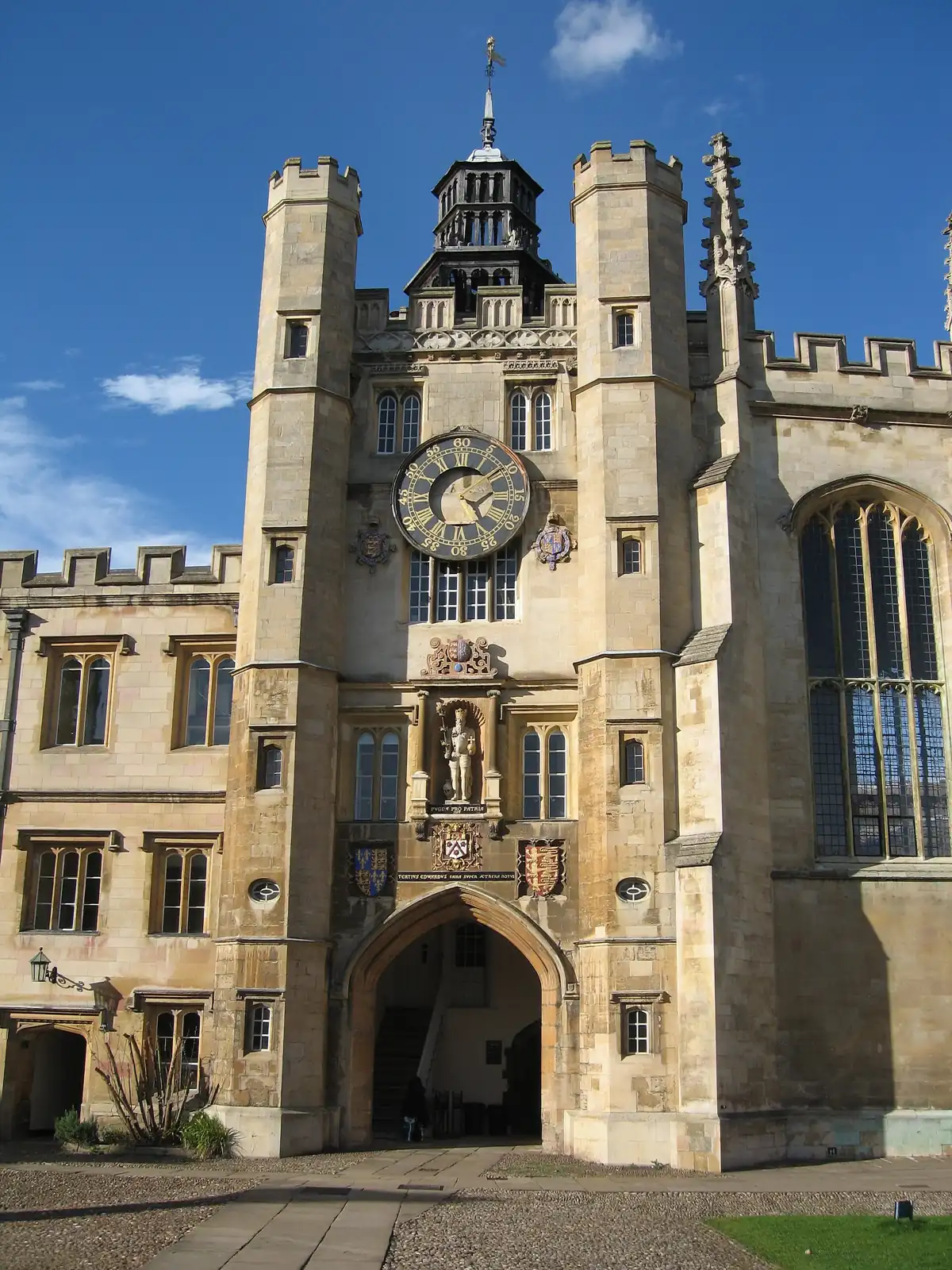
The three years Iqbal spent in Europe, from 1905 to 1908, changed him. He arrived a gifted provincial poet and returned a philosopher with a formed vision, and it was abroad that his central idea of Khudi, the self, took its firm shape. He gathered three kinds of training at once, and each left its mark.
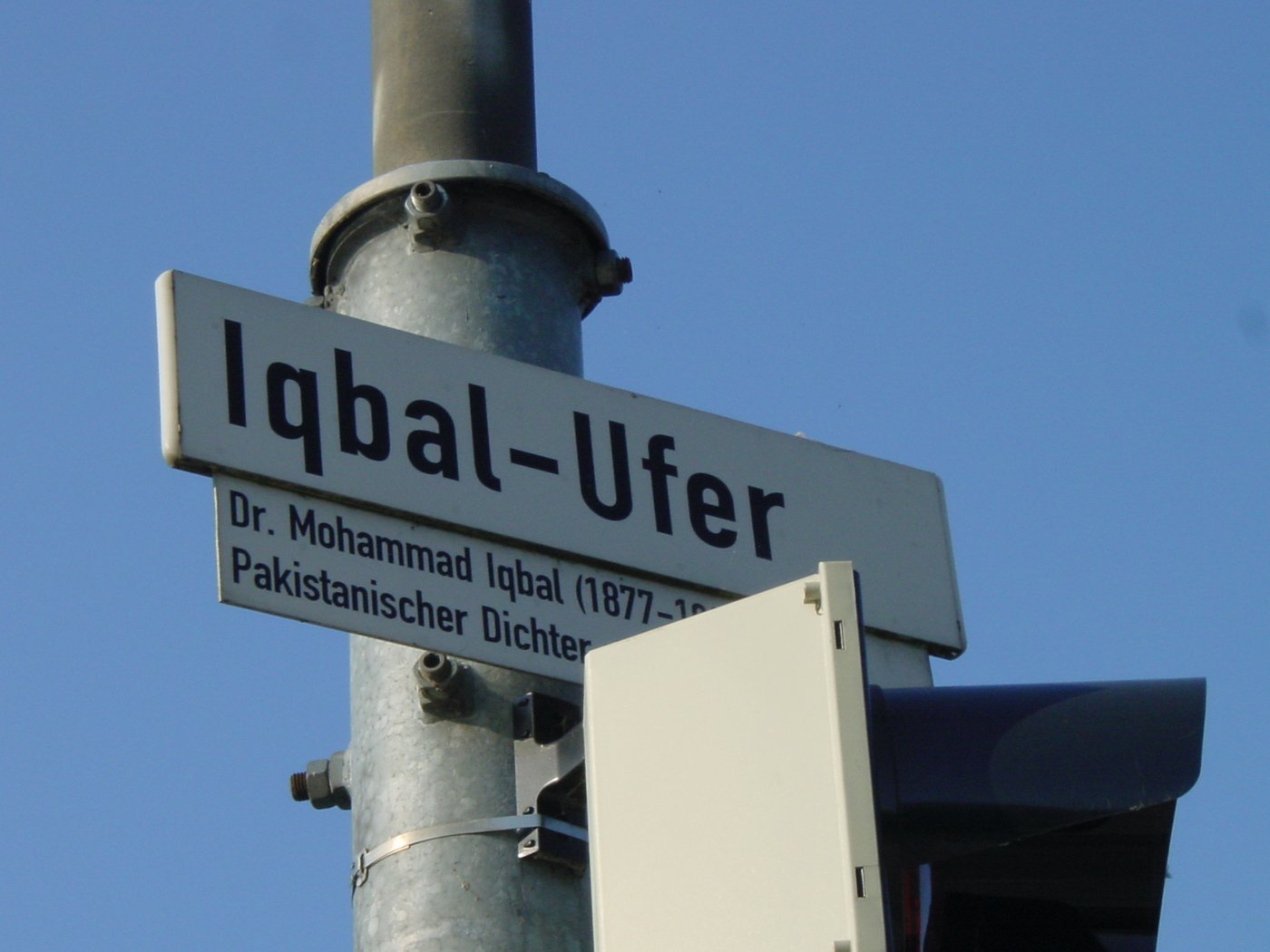
At Trinity College, Cambridge, he studied philosophy under teachers including the idealist J. M. E. McTaggart and the great orientalist R. A. Nicholson, who would later translate Iqbal’s own Asrar-e-Khudi into English. At the University of Munich he earned his doctorate in 1908 with a thesis on The Development of Metaphysics in Persia, a study that traced the history of Persian thought from the ancient world to his own day. And at Lincoln’s Inn in London he qualified as a barrister, the profession that would support him for the rest of his life.
Europe gave him more than degrees. Before Munich he spent time at Heidelberg improving his German, and there he formed a lasting friendship with his teacher Emma Wegenast, with whom he corresponded warmly for years afterward. He read Goethe, Nietzsche, Bergson and the whole current of modern European thought, and he watched at first hand a civilisation of enormous power that seemed to him spiritually hollow. That double impression, admiration for Europe’s energy and unease at its inner emptiness, runs through everything he wrote after. He came home in 1908 with a philosopher’s depth, a lawyer’s discipline and a poet’s voice, all in one man.
Return to Lahore: teaching, law and public service
Iqbal returned to Lahore in 1908 and, for a short time, taught philosophy and English literature at Government College, the very place where Arnold had taught him. But he soon gave up a settled academic post for the freedom of the bar. He practised law at Lahore for most of his working life, yet he did so on his own terms, deliberately keeping his caseload light. He took only enough work to live on, guarding the hours he needed for reading and writing. Law paid the bills; poetry and thought were the real work.
Alongside his practice he gave himself to the life of his community. He was active in the Anjuman-e-Himayat-e-Islam, the leading Muslim educational and welfare body of the Punjab, reciting poems at its gatherings and lending his growing fame to its causes. In the early 1920s the British government knighted him, and he became Sir Muhammad Iqbal, a recognition of his standing as a poet and public figure, though he never let the title soften his criticism of empire. From this base as teacher, lawyer and public man, he would move, in his final years, into politics. The full arc of his working life is told on the page for his career journey.
Timeline of his life
- 1877. Born on 9 November in Sialkot, Punjab.
- 1893 to 1895. Studies at the Scotch Mission School in Sialkot under Sayyid Mir Hassan.
- 1897. Takes his Bachelor of Arts at Government College, Lahore.
- 1899. Completes his Master of Arts in Philosophy at Government College.
- 1905. Travels to Europe and enters Trinity College, Cambridge.
- 1908. Earns his PhD from the University of Munich, qualifies as a barrister at Lincoln’s Inn, and returns to Lahore.
- 1915. Publishes his first long Persian poem, Asrar-e-Khudi.
- 1918. Publishes its companion, Rumuz-e-Bekhudi.
- 1923. Publishes Payam-e-Mashriq and is knighted, becoming Sir Muhammad Iqbal.
- 1924. Publishes his first Urdu collection, Bang-e-Dra.
- 1926 to 1929. Serves in the Punjab Legislative Council.
- 1930. Delivers his Allahabad Address and publishes The Reconstruction of Religious Thought in Islam.
- 1931 to 1932. Attends the Second and Third Round Table Conferences in London.
- 1932. Publishes Javid Nama.
- 1935. Publishes Bal-e-Jibril, widely held to be his finest Urdu book.
- 1936. Publishes Zarb-e-Kalim.
- 1938. Publishes Armaghan-e-Hijaz and dies in Lahore on 21 April.
His major works
Iqbal wrote in both Urdu and Persian, and left one major work of prose. His Persian books carry much of his core philosophy, while his Urdu books reached the widest audience.
Persian poetry: Asrar-e-Khudi (1915), Rumuz-e-Bekhudi (1918), Payam-e-Mashriq (1923), Zabur-e-Ajam (1927), Javid Nama (1932) and Armaghan-e-Hijaz (1938).
Urdu poetry: Bang-e-Dra (1924), Bal-e-Jibril (1935) and Zarb-e-Kalim (1936).
Prose: The Reconstruction of Religious Thought in Islam (1930).
For a book-by-book guide, see the wisdom of Allama Iqbal. On this site you can also read his Persian Rumuz-e-Bekhudi with a couplet-by-couplet Urdu commentary.
Asrar-e-Khudi and Rumuz-e-Bekhudi
Iqbal’s first two Persian books form a pair. Asrar-e-Khudi (The Secrets of the Self, 1915) sets out his doctrine of the self: how the ego is born, how it is strengthened through desire, discipline and love, and how it can reach the heights of a life lived as God’s trustee on earth. Its criticism of a dreamy, self-dissolving strand of Persian poetry caused an uproar in its day, but it announced a wholly new voice. R. A. Nicholson of Cambridge translated it into English in 1920, and with that translation Iqbal’s philosophy first reached the West. Its companion, Rumuz-e-Bekhudi (The Mysteries of Selflessness, 1918), turns from the individual to the community, showing how the strong self completes itself by giving its powers to the millat, the nation of faith. On this site you can read Rumuz-e-Bekhudi with a couplet-by-couplet Urdu commentary.
Payam-e-Mashriq, Zabur-e-Ajam and Javid Nama
The Persian works that followed widened his range. Payam-e-Mashriq (The Message of the East, 1923) was written as a reply to Goethe’s West-Eastern Divan: where Europe had once turned east for wisdom, Iqbal now sent a message back, urging the East to recover its own inner strength. Zabur-e-Ajam (Persian Psalms, 1927) holds some of his most lyrical verse. And Javid Nama (1932), often called his masterpiece, is a long visionary poem in which the poet, guided by Rumi, journeys through the heavens and meets the spirits of the past, a work often set beside Dante’s Divine Comedy. He named it for his son Javid, and through the boy addressed the whole of the coming generation.
Bang-e-Dra, Bal-e-Jibril and Zarb-e-Kalim
His Urdu books reached the widest audience. Bang-e-Dra (The Call of the Marching Bell, 1924) gathered the Urdu poems of his early and middle years, among them Sare Jahan Se Achha and the famous pair Shikwa and Jawab-e-Shikwa. Bal-e-Jibril (Gabriel’s Wing, 1935), widely held to be his finest Urdu book, contains the great ode Masjid-e-Qurtuba and many of his best known couplets on the self. Zarb-e-Kalim (The Rod of Moses, 1936), which he subtitled a declaration of war against the present age, turns a sharper edge on the politics, education and culture of his day.
Armaghan-e-Hijaz and the English prose
His final collection, Armaghan-e-Hijaz (The Gift of the Hijaz), appeared in 1938, the year of his death, part of it published after he had gone. Written in both Persian and Urdu, it gathers the themes of a lifetime. His single major work of prose, The Reconstruction of Religious Thought in Islam (1930), stands apart from the poetry: written in English, it argues in plain philosophical terms for a rethinking of Islamic tradition in the modern age, and is treated in its own section below.
How his poetry developed
Iqbal’s verse did not stand still; it moved through clear stages, and reading him in order is like watching a mind come into its full power. In his early period, gathered in the first part of Bang-e-Dra, he wrote tender nature poems and patriotic songs of an undivided India, Sare Jahan Se Achha among them, in a manner still close to the older Urdu tradition. His years in Europe, from 1905 to 1908, marked the turn. He came back with a philosophy to carry, and his middle period, above all the Persian Asrar-e-Khudi and Rumuz-e-Bekhudi, put poetry to the service of ideas, the self and the community, faith and effort. In his last decade, in Bal-e-Jibril, Zarb-e-Kalim and Armaghan-e-Hijaz, thought and music come together at their height, the philosophy now so fully absorbed that it sings. The same themes run throughout, but the voice deepens from the sweet to the commanding.
His central ideas
The heart of Iqbal’s thought is Khudi, the self. He does not mean pride or ego, but the awake, responsible self that grows through effort, love and action. In Asrar-e-Khudi he describes how this self is strengthened: through desire and purpose that pull it forward, through self-control and discipline, and finally through a life lived as a trustee of God on earth. A weak self drifts and imitates. A strong self, in Iqbal’s picture, does not dissolve into the world but leaves its mark on it.
Around Khudi sit a few linked ideas. He sets ishq, love, against aql, cold calculation, and holds that love is the force that drives real change, while calculation only measures. He praises faqr, a spiritual independence that needs little from the world and so cannot be bought or frightened. His ideal figure is the Mard-e-Momin, the true believer, fearless and just, whose strength comes through God rather than against Him. And he insists that the strong self reaches its full worth only inside a community, so that the individual and the millat, the nation of faith, grow together. His wider thinking is set out on the page for his global philosophy, and his views on learning on the page for his influence on education.
In Asrar-e-Khudi Iqbal describes the growth of the self as a climb through three stages. The first is obedience, the acceptance of law and discipline, as a wild horse first learns the rein. The second is self-control, the mastery of one’s own desires, so that a person rules the self rather than being ruled by it. The third and highest is divine vicegerency, the state in which the fully formed self becomes God’s trustee on earth, shaping the world in line with the divine will. This is no ladder of retreat from life but of ever deeper engagement with it.
His Shaheen, the falcon or eagle, gathers all of this into a single image. The falcon is proud and self-reliant; it builds no nest, keeps no store, and lives by its own effort high in the open sky. Iqbal held it up to the young as the picture of what a person should be: independent, disciplined, above small comforts, always aiming higher. Set against the Shaheen are the birds of the garden, tame and dependent, singing prettily in their cages. The choice between the two is, for Iqbal, the choice every soul and every nation has to make.
The condition he set out to cure
Iqbal’s ideas are best understood as answers to a problem that pressed on him all his life: the decline of the Muslim world. In his own day the great Muslim lands lay under foreign rule or in visible weakness, and he traced this not only to political defeat but to three deeper sicknesses. The first was political subjection, the loss of freedom that made a people the tool of others. The second was intellectual imitation, or taqleed, the habit of merely repeating the past instead of thinking freshly, which had, he believed, shut the door of independent reasoning that once made Muslim civilisation creative. The third was a life-denying quietism, a strand of mysticism and popular piety that taught people to turn away from the world, to accept their lot and wait, rather than to act.
Against each of these he set a cure, and the cures are his central ideas. Against subjection he set Khudi, the strong and free self, in the individual and in the nation. Against imitation he set ijtihad, the courage to reason and to meet new conditions with new answers. Against quietism he set an active, world-shaping faith and the figure of the Mard-e-Momin, who takes hold of life rather than fleeing it. Seen this way, his whole body of work, the poetry and the prose alike, is a single long effort to wake a sleeping people and put it back on its feet.
If Khudi is one wing of his thought, Bekhudi, selflessness, is the other, and the two are not opposites but stages of a single flight. Iqbal was clear that the strong self is not meant to stand alone. Once it has been built through discipline and love, it finds its completion by giving its powers to the community of faith, the millat, much as a drop finds not its end but its fullness in the sea. This is the theme of his second Persian book, Rumuz-e-Bekhudi. The individual gives the community its energy and its heroes; the community gives the individual its purpose, its memory and its cause. A person who has khudi without bekhudi becomes merely selfish; a person who has bekhudi without khudi dissolves into the crowd. Iqbal wanted both together, the strong self freely offered to something larger than itself.
Key concepts in his thought
- Khudi (selfhood). The awake, responsible self, built through effort, love and action. The centre of all his thought.
- Bekhudi (selflessness). Not the loss of the self but its offering to the community, so that the individual finds a wider life inside the millat.
- Ishq (love). The creative force that drives a person past caution into effort and risk, set against cold reason.
- Faqr. A spiritual poverty or independence that frees a person from need and fear, and so from control by others.
- Mard-e-Momin. The true believer, Iqbal’s ideal human being, fearless, just and tender, whose power flows from faith.
- Shaheen (the eagle). His favourite symbol for the self that is proud, self-reliant and seeks the heights rather than comfort.
- Millat. The community of faith, which gives the individual purpose and to which the individual gives strength.
- Ijtihad. Independent reasoning in religious law, which Iqbal saw as the principle of movement that keeps Islam alive to a changing world.
- Taqleed. Blind imitation of the past, the opposite of ijtihad, which Iqbal blamed for much of the community’s stagnation.
- Yaqeen (certainty). The firm inner conviction that gives a person the strength to act; its loss, for Iqbal, is a chief cause of weakness.
- Amal (action). The conviction that thought and faith prove themselves only in deeds, not in words or dreams.
- Wataniyat (territorial nationalism). The idea of a people based on land and race, which Iqbal criticised as a false idol of the modern age.
His politics and the idea of Pakistan
In the last decades of his life Iqbal turned to politics. He sat in the Punjab Legislative Council, attended the Round Table Conferences in London, and in his 1930 Allahabad Address proposed bringing the Muslim-majority regions of north-west India together into a single self-governing state, widely read as the first clear call for Pakistan. He urged Muhammad Ali Jinnah to lead the Muslim League and worked through the case in a well known set of letters. He also distrusted narrow territorial nationalism, which he called one of the false idols of the age, and looked instead toward a community bound by faith and shared values. The full account is on the page for his political philosophy and vision.
His most important political statement was the presidential address he gave to the Muslim League at Allahabad in December 1930. There he argued that the Muslims of north-western India formed a distinct people, with their own religion, culture and way of life, and that their future would be safest in a consolidated Muslim state. He did not draw the borders of a country, and he framed the idea in terms of the community’s inner life rather than mere territory, but the address is rightly seen as the first clear statement of the thinking that led to Pakistan.
Two convictions shaped his politics. The first was a deep distrust of the modern West’s two great idols. Territorial nationalism, which made land and race the basis of a people, he rejected in favour of the millat, a community bound by shared belief. Democracy understood as mere counting he mocked in a famous couplet, objecting that such a system counts heads but never weighs them, mistaking numbers for wisdom. The second conviction, growing stronger in his last years, was that the Muslims of India needed a political home of their own. In a series of letters written to Muhammad Ali Jinnah in 1936 and 1937 he pressed the League to take up the cause, and Jinnah later acknowledged their influence on his own thinking.
His later travels
The last decade of Iqbal’s life took him abroad several times, and these journeys left their mark on his work. In 1931 and 1932 he travelled to London for the Second and Third Round Table Conferences on the future of India, and while in Europe he met the philosopher Henri Bergson in Paris. In 1933 he visited Spain, where he was allowed to pray in the great Mosque of Cordoba, silent as a mosque for centuries; out of that experience came one of the peaks of his Urdu verse, Masjid-e-Qurtuba. The same year he was invited to Afghanistan by its government, together with the scholars Sir Ross Masood and Sulaiman Nadvi, to advise on education, and the journey through that mountain country produced his Persian poem Musafir, the Traveller. These were the travels of a man near the end of his road, gathering impressions that turned at once into poetry.
Iqbal and Jinnah
The link between Iqbal the thinker and Muhammad Ali Jinnah the statesman is one of the most important in the history of the subcontinent. In the mid 1930s, when the Muslim League was weak and Jinnah himself uncertain of the path ahead, Iqbal wrote him a series of letters urging him to take up the cause of India’s Muslims and pointing toward a separate political future for them in the north-west. Jinnah later gathered these letters and published them, and in his introduction he acknowledged that Iqbal’s thinking had helped shape his own. Iqbal did not live to see a Muslim state founded; he died in 1938. But the idea he had framed at Allahabad in 1930, and pressed on Jinnah in those letters, became the seed of the demand that Jinnah carried to success. For this reason Pakistan honours Iqbal as its spiritual and intellectual father, and Jinnah as its founder.
How his idea was carried forward
Iqbal died in April 1938, nine years before the country many associate with him came into being. He left a vision rather than a blueprint, and the work of turning that vision into a state fell to others, above all to Jinnah and the Muslim League, who in 1940 adopted the demand for a separate homeland and in 1947 achieved it. Iqbal’s part was to have given that demand its deepest justification, an argument not from grievance alone but from a whole philosophy of the self, the community and history. In the years since, his poetry has remained the emotional and intellectual charter of the country, quoted in its founding moments and in every later debate about what it is for. Few nations owe so much of their sense of themselves to a single poet.
The Reconstruction of Religious Thought in Islam
Iqbal’s one major work of prose, published in 1930 and expanded in 1934, is the fullest statement of his philosophy. In seven lectures he argues that the Islamic tradition can be rethought for the modern age without losing its soul. He examines knowledge and religious experience, the conception of God, the freedom and immortality of the human self, the spirit of Muslim culture, and above all the principle of ijtihad, independent reasoning, which he holds to be the engine of movement within Islam. Because Iqbal died in 1938, the English text is in the public domain and free to read. See our dedicated page on The Reconstruction of Religious Thought in Islam for a summary of each lecture and access to the full text.
His idea of God and the universe
Behind Iqbal’s philosophy of the self lies a particular picture of God and the world, set out most fully in his prose. He conceived of God not as a distant, unchanging first cause but as the Ultimate Ego, an infinite, living, creative self, the source and model of the finite selves that reach toward it. The universe, in turn, is not a finished machine but an unfinished work, still being made, open to the future and to the free acts of the beings within it. Time, for Iqbal, is real and creative rather than a line of dead, repeating moments, and it is in real time that both God and the human self bring genuinely new things into being.
This vision has a direct bearing on how a person should live. If the world is still being made, then human effort is not a pointless struggle against a fixed fate but a real share in creation. If the human ego is free, then it carries real responsibility, and immortality becomes not an automatic gift but something to be won by making the self strong and enduring. In this way Iqbal’s boldest metaphysics and his simplest call to action are one and the same: a living God, a growing universe, and a free self that is invited to help shape it.
Sufism and the influence of Rumi
Iqbal’s thought is rooted in the Islamic mystical tradition, and above all in Rumi. He treated the older Persian poet as his master and guide, quoted him throughout his work, and in Javid Nama cast Rumi as his companion on a journey through the heavens, much as Virgil guides Dante in the Divine Comedy. From this tradition Iqbal took the language of divine love and of the self on its way toward God.
But he read that tradition in an active key, and this is where he parts from a good deal of older mystical poetry. Some Sufi verse turns inward and away from the world, praising the loss of the self in God and treating life as a thing to be escaped. Iqbal turned the direction around. For him the meeting with God should strengthen the self, not erase it, and push a person outward into effort, courage and the building of a just community. His mysticism is world-affirming: self-purification and the work of the world are, for him, part of the same task. That is why he could be at once the most spiritual and the most active of poets.
Rumi’s presence in Iqbal goes deeper than quotation. Iqbal took from him the conviction that love, not intellect, is the highest human power, and the picture of a restless soul forever seeking its source. But where later followers had often read Rumi as a call to dissolve the self, Iqbal read him as a call to build it, and made the older poet the living guide of his own philosophy of Khudi. In Javid Nama it is Rumi who leads him through the spheres, answering his questions, and the choice of guide is itself a statement: the mystical tradition, rightly understood, points not away from life but straight into it.
His dialogue with the West
Iqbal read European philosophy more deeply than almost any Eastern poet of his time, but he did not simply take from it. He treated the great Western thinkers as partners in an argument, learning from them and correcting them in the same breath, always measuring them against the Quran and his own idea of the self.
With Goethe he felt the closest kinship. He admired the German poet’s picture of endless striving, the restless will of Faust that will not settle for any final rest, and he answered Goethe’s West-Eastern Divan with his own Payam-e-Mashriq, a message from the East to match the West’s earlier turn eastward. With Nietzsche his relationship was more troubled. He shared Nietzsche’s longing for a stronger, higher kind of human being and his contempt for a tame, herd-like mediocrity, yet he rejected Nietzsche’s world without God and without love, which he thought left the strong self hollow at the core. Iqbal’s Mard-e-Momin is Nietzsche’s higher man turned back toward the divine: powerful, but powerful through faith and love rather than against them.
From Henri Bergson, whom he met in Paris, Iqbal took the sense of time not as a line of dead, identical moments but as a living, creative flow, and he wove this into his own view of a universe that is still being made and of a God who is a living, creative self rather than a distant abstraction. In each case the pattern is the same. Iqbal engages the West at its strongest, accepts what he can use, and anchors it in a faith the Western thinkers had let go. His fuller engagement with these figures is set out on the page for his global philosophy.
The philosopher and the poet
Iqbal is unusual in being at once a serious philosopher and a great poet, and the two sides of him cannot really be pulled apart. He thought his ideas through with a philosopher’s rigour, in dialogue with Plato, the Muslim thinkers, and the modern Europeans, and he set them out in careful prose in his English lectures. But he believed that ideas move people only when they are felt, not merely understood, and so the same ideas come to us a second time in his verse, carried in image, rhythm and feeling. Khudi is argued in the Reconstruction and sung in Asrar-e-Khudi. The result is a body of work in which philosophy gives the poetry its weight and poetry gives the philosophy its fire, and in which a single reader can meet the same vision as thought and as song.
His place in the tradition of reform
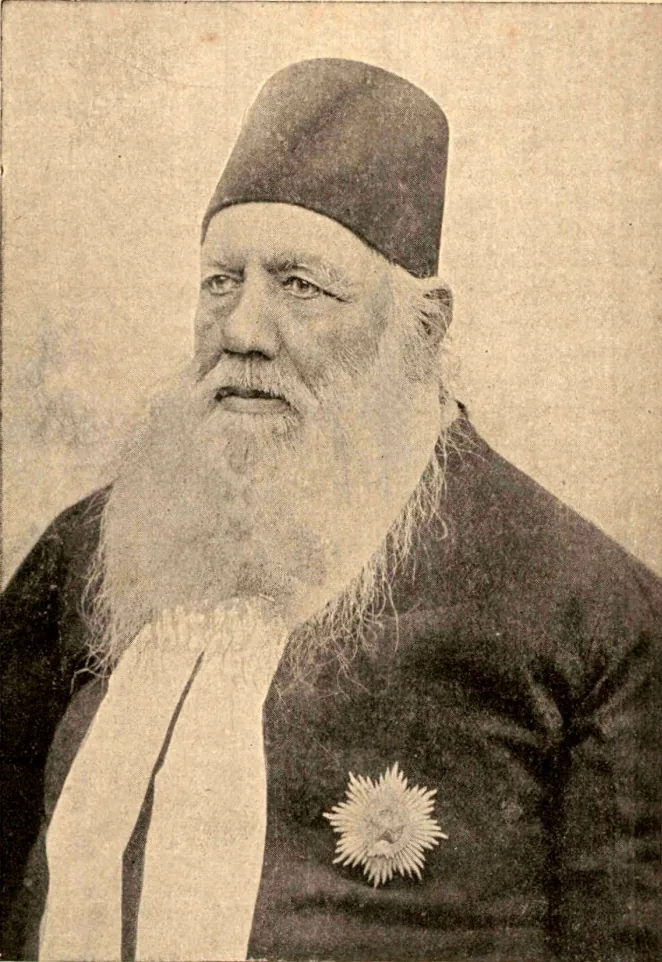
Iqbal did not arise from nowhere. He belonged to a line of Muslim reformers who, through the nineteenth and early twentieth centuries, tried to rouse their community from decline and to reconcile its faith with the modern world. Before him, figures such as Sir Syed Ahmad Khan and the Aligarh movement had pressed for modern education and a fresh reading of the tradition. Iqbal honoured that impulse, but he carried it far deeper. Where the earlier reformers had thought mainly of schools and institutions, Iqbal went to the roots, to the philosophy of the self, the nature of God and time, and the inner springs of a civilisation’s rise and fall. He gave the reform movement what it had lacked, a complete vision of the human being and of history, expressed with a poet’s power. That is why he stands not merely as one reformer among others but as the thinker who gave the whole effort its deepest voice.
His wider influence
Because he wrote so much in Persian, Iqbal reached Iran without translation, and he is held in high regard there as Iqbal Lahori. His work was translated into Arabic and read by writers and reform movements across the Arab world, and he has a steady audience in Turkey as well. In our own time his couplets travel easily online, shared each year around Iqbal Day. His reception across these regions is covered on the page for his cultural legacy, and his life online on the page about Iqbal in the digital age.
His reach can be traced region by region. In Pakistan he is the national poet and the acknowledged thinker behind the state, taught in every school and quoted in every public debate about the country’s purpose. In Iran, where his Persian verse is read without translation, he is honoured as Iqbal Lahori and counted among the modern masters of the language, an extraordinary place for a poet born in Punjab. In India, the country of his birth, his early Sare Jahan Se Achha remains one of the best loved patriotic songs, sung long after the politics of partition. Across the Arab world his work was translated and read by writers and reform movements, and in Turkey he has a steady and admiring audience. Beyond these, his couplets now travel the whole world online, carried by a diaspora that finds in him a language for its own hopes.
Themes that run through his work
For all its range, Iqbal’s work returns again and again to a small cluster of themes, and to read him well is to hear them sounding together.
The first is the self. Whether he writes in Persian or Urdu, in a short ghazal or a long masnavi, the question of how a person becomes a real, strong, free self is never far away. The second is ishq, love or passion, the force that lifts the self out of caution and calculation into effort and risk; a life without it, however clever, stays small. The third is time and movement. Iqbal distrusted anything settled and static, and he praised the restless, forward motion of a life and a community that keep remaking themselves rather than resting on the past.
The fourth is the meeting of East and West, the East rich in spirit but asleep, the West powerful but hollow, and the task of joining the strength of the one to the soul of the other. The fifth is hope. However sharply he named the decline of his community, he never left his readers in despair; almost every complaint ends in a call to rise. Running under all of these is his faith, which is not one theme among others but the ground the rest stand on.
Iqbal and the Quran
Beneath all of Iqbal’s philosophy and all his reading of the West lies the Quran, which he treated not as a book of settled rules to be recited but as a living voice that seizes life by the roots. He read it as a summons to action rather than to retreat, finding in it the very ideas he made his own: that the human being is God’s trustee on earth, that the universe is not finished but still being made, that thought and observation are acts of faith, and that a people rises or falls by its own effort. His father’s advice, that he should read the Quran as if it were being revealed to him directly, stayed with him all his life. Much of what looks like modern philosophy in Iqbal is, in his own view, the Quran read with fresh eyes, and his prose work The Reconstruction of Religious Thought in Islam is in large part an attempt to show exactly that.
His view of art and poetry
Iqbal had no patience with the idea of art for its own sake. Beauty that did nothing but please, poetry that soothed without waking, seemed to him a kind of betrayal. He held that art must serve life, that it should strengthen the will, stir courage, and send a person back into the world with more fire than before. His own poetry was written on exactly this principle. It was meant to be, in his image, less a lullaby than a marching bell or the trumpet that raises the dead, and he judged all art by whether it added to life or drained it away.
His message to the youth
No audience mattered more to Iqbal than the young. Again and again he turned aside from the old and the settled to speak directly to students and to the rising generation, because it was in them that he placed his hope. To the young he offered the Shaheen as their model, warned them against a comfort and imitation that would clip their wings, and called them to dream large and to test themselves against great things. Some of his most quoted lines are addressed to them, urging them to throw their lassos around the stars. His thinking on the training of the young is set out on the page for his influence on education.
Why he wrote so much in Persian
Although he is the national poet of a country whose language is Urdu, more than half of Iqbal’s verse is in Persian, and this was a deliberate choice. Persian was the shared literary language of the wider Muslim world, read from Turkey through Iran and Afghanistan into Central Asia and India, and by writing in it Iqbal could speak to that whole world at once rather than to India alone. Persian also carried the great tradition of Rumi, Hafiz and Saadi, the very tradition he wished both to honour and to reform, and its richness suited the philosophical weight of his message. His mastery was such that Iran itself claimed him, honouring him as Iqbal Lahori.
Women and the family
Iqbal gave the home, and above all the mother, a central place in his vision of the nation. He held that the health of a whole people begins in the family, and that the mother, as the first teacher of the young, shapes the future more surely than any statesman. Several of his poems honour the mother’s role, and his elegy for his own mother is among his tenderest work. His view of women was in many ways that of his time and his tradition, and later readers have debated it, but at its heart lay a high regard for the woman as the keeper of the values on which, in his thinking, everything else depends.
Reception in his own time
Iqbal did not have to wait for later ages to be recognised. Long before his death he was the most famous poet of Muslim India, his verses recited at great public gatherings and passed from mouth to mouth. The title Shair-e-Mashriq, Poet of the East, was given to him in his own lifetime, the British crown knighted him, and leaders and scholars sought his views. His criticism of a beloved tradition, and later his politics, drew argument as well as praise, but even those who disagreed with him treated him as a force to be reckoned with. He died a national figure, mourned across the subcontinent.
His prose, letters and speeches
Iqbal is remembered first as a poet, but he left a considerable body of prose that repays reading. Besides The Reconstruction of Religious Thought in Islam, his major philosophical work, there is the private English notebook of 1910 published as Stray Reflections, in which we meet him thinking aloud, with a frankness his finished work rarely shows. His many letters, gathered and published in several volumes, are among the best sources for his inner life and his developing views, from the warm correspondence with his German teacher to the weighty political letters to Jinnah. And his speeches, above all the Allahabad Address of 1930, stand as documents in their own right. Taken together, this prose lets us check the poet against the plain-speaking thinker, and the two are found to agree.
Common misunderstandings
Because Iqbal is so widely quoted and so little read in full, several misunderstandings cling to his name, and it is worth clearing a few away.
That Khudi means arrogance. The word can be read as mere ego or pride, and careless readers take it so. Iqbal meant almost the reverse: a disciplined, God-conscious self, built through obedience and self-control, whose strength is used in service, not in vanity. That he rejected the West. He criticised the spiritual emptiness he saw in modern Europe, but he admired its energy, its science and its will, and he urged the East to master exactly these, only without losing its soul. That his early and late poems contradict each other. The young poet of a united India and the later advocate of a Muslim homeland are the same man at different stages of one journey, moving from a territorial idea of nation, which he came to distrust, toward one built on faith. Reading him whole, rather than in scattered couplets, dissolves most of the puzzles that grow up around him.
Criticism and controversies
No thinker of Iqbal’s standing escapes debate, and several questions have followed his work for a century.
How much did he borrow from Western philosophy? Some critics argue that Iqbal leaned heavily on Western thinkers such as Nietzsche, Bergson and Goethe, and that his idea of Khudi echoes Nietzsche’s Übermensch, the self-made individual who sets his own values. Iqbal never hid his study of these figures. His answer, and that of his defenders, is that he did not adopt their ideas whole but reworked them inside an Islamic frame. His Khudi, unlike the Übermensch, does not reject God. It grows by lining up the human will with the divine, so that greatness comes through faith rather than against it.
The Hafiz controversy. When Asrar-e-Khudi first appeared in 1915, Iqbal criticised the dreamy, self-dissolving strand of Persian poetry associated with Hafiz, whom many readers revered. The attack caused an uproar among lovers of classical verse, and Iqbal later softened some of the sharpest lines. The episode shows how deliberately he broke with a tradition of quietism that he thought had weakened his community.
From Indian patriot to Muslim separatist. Readers often note the distance between the young Iqbal who wrote Sare Jahan Se Achha, a song of undivided India, and the later Iqbal who argued for a separate Muslim state. He saw this less as a reversal than as a development: a move from a territorial idea of nation, which he came to distrust, toward one built on faith and shared values.
Idealism and practice. Others point out that Iqbal set out a vision more than a detailed programme, and that turning his ideals into working institutions was left to those who came after him. He also drew fire from two opposite directions in his own day: from secular nationalists, who rejected his two-nation idea, and from some traditional scholars, who were uneasy with his call to reopen independent reasoning and with how freely he engaged Western thought. His replies to such charges run through his prose, above all in The Reconstruction of Religious Thought in Islam.
Scholarship on Iqbal
Few modern writers have drawn as much study as Iqbal. The most complete survey, Rafiuddin Hashmi’s Kitabiyaat-e-Iqbal (2023), lists around 6,000 items in Urdu alone, and there are several hundred book-length studies in English and other languages, from Annemarie Schimmel’s Gabriel’s Wing to more recent comparative work. For a guided selection of the most important titles and where to find them, see our page on books on Allama Iqbal.
Little-known facts
- He knew several languages. Iqbal worked in Urdu, Persian, English, Arabic and his mother tongue Punjabi.
- Europe changed him. His years in England and Germany, from 1905 to 1908, reshaped his thinking and gave his idea of Khudi its firm form.
- He first refused a knighthood. He accepted only on the condition that his old teacher Sayyid Mir Hassan be recognised as well.
- He kept his law practice small on purpose, taking only enough work to live so that money would not crowd out his writing.
- He worked through a long final illness, a throat ailment that took his voice, yet he kept writing almost to the end.
- More than half of his poetry is in Persian, a language he chose to reach the whole Muslim world beyond India.
- His youthful song Sare Jahan Se Achha is still played as a march by the armed forces of India, long after the partition he did not live to see.
- He read European philosophy in the original, in both English and German, and argued with it on its own ground.
More of these lesser known sides of his life are gathered on the page for the unexplored dimensions of Allama Iqbal.
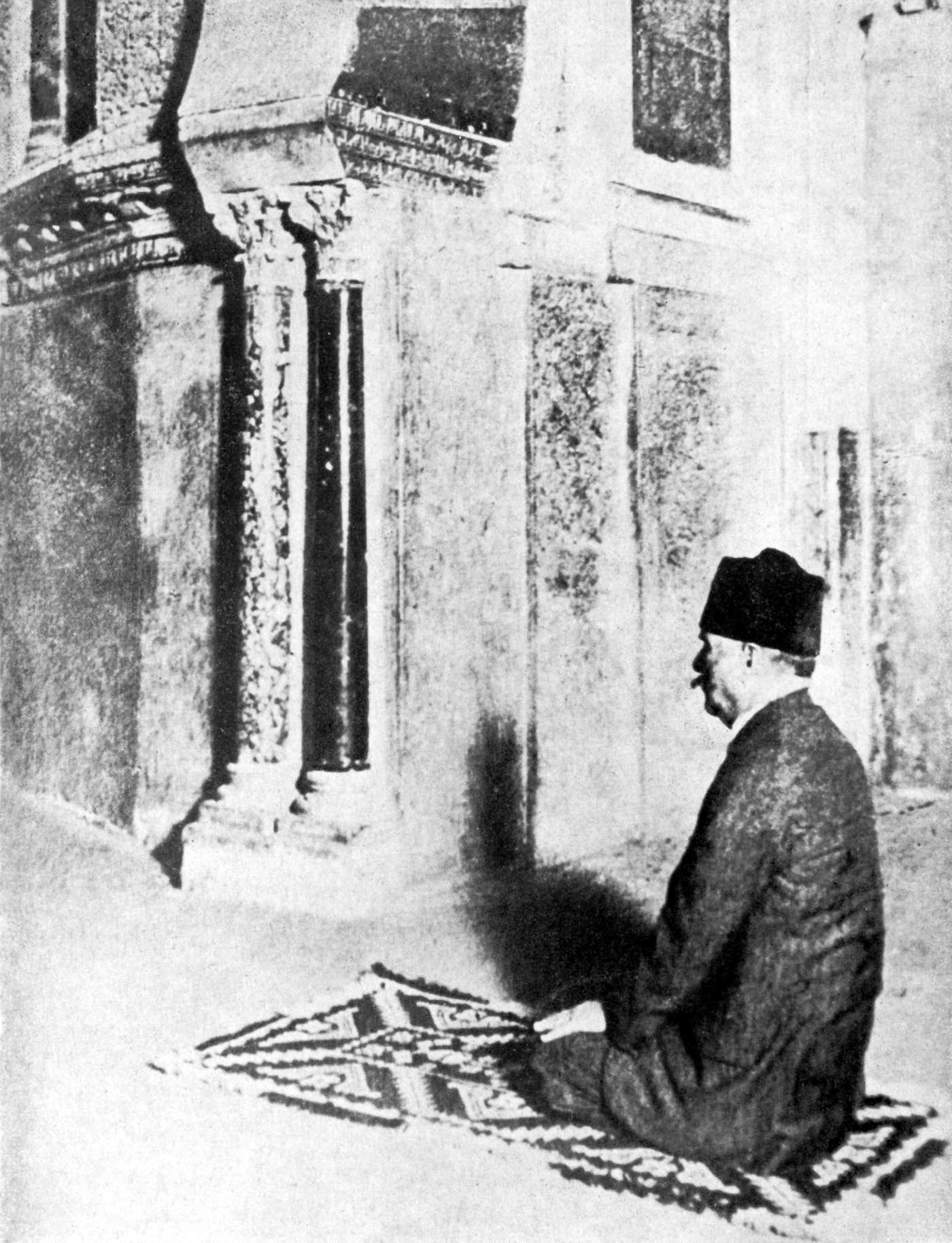
The great symbols of his verse
Iqbal thought in images as much as in arguments, and a handful of symbols recur across his work, each carrying a settled meaning that grows richer the more one reads.
- The Shaheen (falcon). His central symbol for the ideal self: proud, self-reliant, high-flying, keeping no nest and no store, living by its own effort in the open sky.
- The desert tulip (lala-e-sehra). The flower that grows wild in the wilderness, watered by no gardener, an image of the selfhood that rises by its own inner fire rather than by care and cultivation.
- The candle and the moth (sham-o-parwana). The old image of love that ends in self-surrender, which Iqbal takes up but turns toward his own end, making the moth’s fire a sign of a love that strengthens rather than merely consumes.
- Wine and the cupbearer (saqi). The classical figures of mystical poetry, in Iqbal’s hands standing for the spiritual intoxication and the guidance that wake a sleeping people.
- The star and the open sky. Recurring images of aspiration, of worlds beyond worlds, and of a journey that is never finished.
Part of the pleasure of reading Iqbal is watching him take symbols worn smooth by centuries of Persian and Urdu verse and charge them with new, active meaning.
His language and music
Iqbal is one of the great music-makers of Urdu and Persian, and much of his hold on readers is a matter of sound as well as sense. He wrote in the classical forms, the ghazal, the nazm, the masnavi and the rubai, and he handled them with a command that let him carry the weight of philosophy without ever losing the line’s melody. His verse is built to be spoken aloud, and it was in recitation, at great public gatherings, that it first took hold. That musicality has kept his poems alive far beyond the page: they are sung by leading vocalists and qawwals, taught to children, and set to music again in each generation. Even a reader with no Urdu, coming to him through translation, can sense the drive and lift of the original, because the movement of thought and the movement of the verse are, in Iqbal, the same thing.
Famous poems of Iqbal
Beyond his books as a whole, a handful of individual poems have taken on a life of their own.
- Tarana-e-Hindi (Sare Jahan Se Achha). A song in praise of undivided India, from his early years, still sung across the subcontinent.
- Tarana-e-Milli. A companion anthem written later, celebrating the wider Muslim community that crosses national borders.
- Shikwa and Jawab-e-Shikwa. The famous pair in which a Muslim complains to God about his community’s decline, and God answers.
- Khizr-e-Rah. A long poem in the form of a dialogue with the immortal guide Khizr about the problems of the modern age.
- Tulu-e-Islam (The Dawn of Islam). A poem of hope and revival, calling the community to rise to a new day.
- Masjid-e-Qurtuba (The Mosque of Cordoba). Written after Iqbal visited Spain, a meditation on time, art and the enduring power of faith, and one of the peaks of his Urdu verse.
- Lenin (Khuda ke Huzoor). An imagined scene in which Lenin stands before God and questions a world ruled by capital, from Bal-e-Jibril.
- Jibril o Iblis (Gabriel and Satan). A striking dialogue between the angel and the fallen one that turns the usual moral picture on its head.
A few of these deserve a closer word. Shikwa and Jawab-e-Shikwa together form one of the boldest works in Urdu: in the first the poet dares to complain to God about the fallen state of the Muslims, and in the second God replies, turning the complaint back on a community that has abandoned its own faith and effort. Masjid-e-Qurtuba, written after Iqbal prayed in the long-silent Mosque of Cordoba in Spain, meditates on how everything in time must pass, and yet how a work born of true love and faith outlasts the empire that raised it. And Sare Jahan Se Achha, written in his youth, remains so loved that many who sing it have no idea the same poet went on to imagine a separate homeland; the two belong to different stages of one long journey.
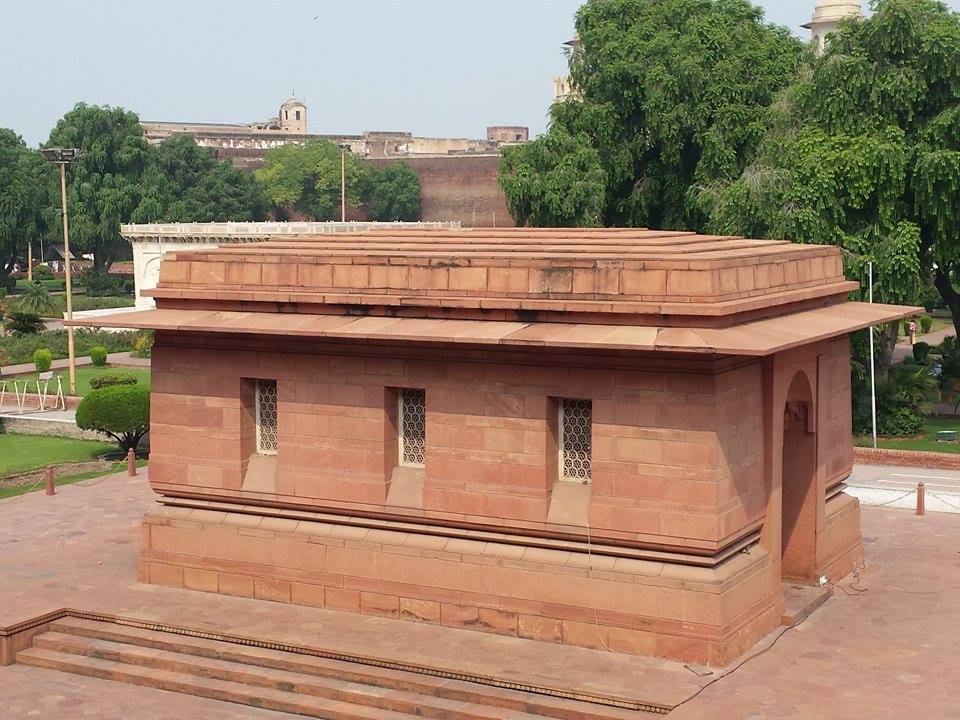
Honours, death and memorials
Iqbal was knighted in 1923 and became widely known as Allama, a title of great learning. He died in Lahore on 21 April 1938, after a long illness, and was buried in a simple tomb between the Badshahi Mosque and the Lahore Fort. That tomb, the Mazar-e-Iqbal, was built after independence and is now a place of pilgrimage for admirers of his work.
His memory is kept in several ways. Each year on 9 November his birthday is marked in Pakistan as Iqbal Day. The house where he was born in Sialkot, Iqbal Manzil, and his last home in Lahore, Javed Manzil, both survive as museums that hold his belongings and manuscripts. His likeness has appeared on stamps and currency, and Lahore’s main airport, the Allama Iqbal International Airport, carries his name. Few poets are woven so deeply into the daily life of a nation.
His last years were shadowed by illness. From the early 1930s a throat ailment slowly took his voice, and toward the end he could no longer recite the poems he had once delivered to great gatherings. Yet he kept writing almost to the last, dictating when he could not speak, and his final books show no falling off of power. He died in the early morning of 21 April 1938 at his home, Javed Manzil, in Lahore, and was buried, as he had wished, in a plain tomb near the Badshahi Mosque, at the heart of the city he had made his own.
Why he still matters
Iqbal died more than eighty years ago, yet his questions have not aged. He asked how a people can borrow the science and machinery of a stronger civilisation without losing its own soul, how the individual can be free and strong without becoming selfish, and how faith can meet the modern world without either surrendering to it or hiding from it. These are still the questions of much of the world today, and that is why his couplets keep being quoted, in classrooms and parliaments and on the small screens people carry in their pockets. He offers no easy comfort. What he offers is a summons: to wake the self, to reject despair, and to make something of the one life each person is given. That summons is the reason a poet of the early twentieth century still speaks, with undimmed force, to readers who will live most of their lives in the twenty-first.
How to read Iqbal
A reader coming to Iqbal for the first time need not begin with the philosophy. The best door is often a single famous poem, read slowly, with a plain translation to hand; from there the ideas open naturally. It helps to remember that his key words, Khudi, ishq, faqr, the Shaheen, carry a weight the ordinary dictionary sense does not capture, and that he uses them again and again until they gather their full meaning. Above all he is meant to be felt as well as understood. Read aloud, even in translation, his lines still do what he wanted them to do, which is to leave a reader more awake, more hopeful and less willing to settle. The rest of this site, from his individual books to his quotes and his politics, is arranged to take you as far into his world as you wish to go.
Iqbal and Ghalib
In the history of Urdu poetry two names stand above the rest, Mirza Ghalib in the nineteenth century and Iqbal in the twentieth, and it is natural to set them side by side. Ghalib was the supreme poet of the personal, the master of the ghazal who turned his own losses, doubts and metaphysical wit into verse of unmatched subtlety. Iqbal admired him deeply and paid him tribute in an early poem, yet his own gift pulled in a different direction. Where Ghalib sang the solitary self facing an inscrutable universe, Iqbal sang the collective self of a whole community and set it a task. Ghalib’s mood is often one of beautiful resignation; Iqbal’s is one of restless summons. The two are not rivals so much as the two poles of Urdu poetry, the inward and the outward, the private sorrow and the public call, and between them they mark out much of what the language can do.
Explore more on this site
- The early academic life of Allama Iqbal
- The career journey of Allama Iqbal
- The family and personal life of Allama Iqbal
- The wisdom of Allama Iqbal (his books)
- The political philosophy and vision of Allama Iqbal
- The global philosophy of Allama Iqbal
- The influence on education of Allama Iqbal
- The cultural legacy of Allama Iqbal
- The unexplored dimensions of Allama Iqbal
- Allama Iqbal in the digital age
- The Reconstruction of Religious Thought in Islam
- Books on Allama Iqbal
- Allama Iqbal quotes
Frequently asked questions
When and where was Allama Iqbal born?
He was born on 9 November 1877 in Sialkot, in the Punjab. The date is now marked in Pakistan as Iqbal Day.
Why is he called the Poet of the East?
The title Shair-e-Mashriq, Poet of the East, was given to him because he spoke for the spiritual heritage of the East, setting it against the materialism he saw in the modern West and calling the East to a renewal of its own strength.
Did Allama Iqbal found Pakistan?
No. Iqbal framed the idea of a separate Muslim state in his 1930 Allahabad Address and pressed it on Muhammad Ali Jinnah, but he died in 1938, nine years before Pakistan was created in 1947. Pakistan honours him as its spiritual and intellectual father, while Jinnah is remembered as its founder.
What is Khudi?
Khudi is Iqbal’s central idea. It means selfhood: not pride or ego, but the awake, disciplined and God-conscious self that grows through effort, love and action, and that reaches its height in serving something larger than itself.
What did Allama Iqbal write?
He wrote poetry in Persian and Urdu and one major work of prose in English. His best known books include the Persian Asrar-e-Khudi, Rumuz-e-Bekhudi and Javid Nama, the Urdu Bang-e-Dra, Bal-e-Jibril and Zarb-e-Kalim, and the prose The Reconstruction of Religious Thought in Islam.
Where is Allama Iqbal buried?
He died on 21 April 1938 in Lahore and is buried in a simple tomb, the Mazar-e-Iqbal, beside the Badshahi Mosque in the old city.
What is the two-nation idea associated with Iqbal?
It is the view that the Hindus and Muslims of India were two distinct peoples, with their own faiths, cultures and ways of life, rather than one nation. Iqbal gave this idea a philosophical grounding in his 1930 Allahabad Address and argued that the Muslims would be safest with a homeland of their own in the north-west of the subcontinent.
What is The Reconstruction of Religious Thought in Islam about?
It is Iqbal’s major work of prose, a set of seven lectures delivered in English in the late 1920s. In them he argues that the Islamic tradition can be rethought for the modern age without losing its essence, drawing on both the Quran and modern science and philosophy, and placing special weight on ijtihad, independent reasoning, as the principle of movement within Islam.
Who translated Iqbal into English?
Several notable scholars did. R. A. Nicholson of Cambridge translated Asrar-e-Khudi as The Secrets of the Self in 1920, A. J. Arberry rendered several of the Persian works including Rumuz-e-Bekhudi and the Javid Nama, and V. G. Kiernan produced widely read English versions of the shorter poems.
What are Allama Iqbal’s most famous poems?
Among his best known are Sare Jahan Se Achha, the pair Shikwa and Jawab-e-Shikwa, Masjid-e-Qurtuba (The Mosque of Cordoba), Tulu-e-Islam, and the children’s prayer Lab pe aati hai dua, along with many single couplets on the self and effort that are quoted on their own.
Resources and references
For further study of Iqbal’s life, works and philosophy, these are reliable starting points:
- Iqbal Academy Pakistan and its Iqbal Cyber Library, the official archive of his work.
- Muhammad Iqbal bibliography (Wikipedia), a working list of major works by and about him.
- Encyclopaedia Britannica, for a general overview of his life and works.
- Internet Archive, for free out-of-copyright editions of his books.
- His primary texts, including Bang-e-Dra, Bal-e-Jibril, Asrar-e-Khudi and The Reconstruction of Religious Thought in Islam.